Thạch Sanh Lý Thông
Ngày xưa có 2 vợ chồng bác tiều phu già mà chưa có con. Hai vợ chồng lo làm điều thiện, và cầu xin Trời Phật cho một người con. Năm sau người vợ có thai, sinh ra một bé trai kháu khỉnh khỏe mạnh. Hai người vui mừng đặt tên con là Thạch Sanh.
A long time ago there was a kind and old but childless couple. They lived a simple life, cutting fire wood in exchange for rice and food. The couple prayed for a child every day. God felt moved and sent an angle to grant their wish, so the old woman became pregnant. The next year she gave birth a healthy son. The child was named Thach Sanh.
Autrefois, Il y avait bien longtemps, vivait un vieux couple bûcheron sans enfants. Il vivait une vie simple, coupant du bois pour l’échanger avec du riz et de la nourriture. Le couple priait pour avoir un enfant chaque jour. Dieu sentit devoir faire quelque chose et consentit à combler leur désir, de sorte que la vieille femme tomba enceinte. L’année suivante, elle mît au monde un fils en bonne santé. L’enfant fut nommé Thach Sanh.
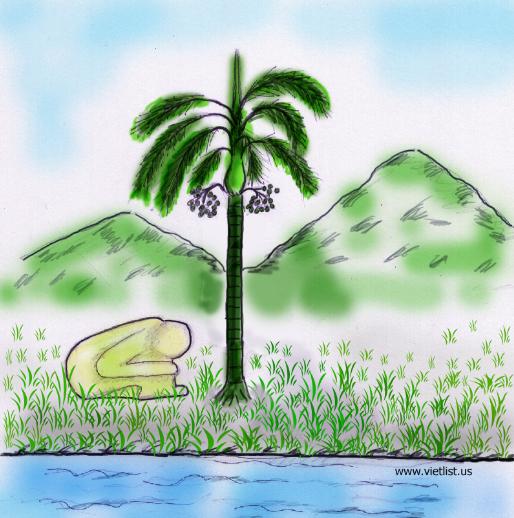
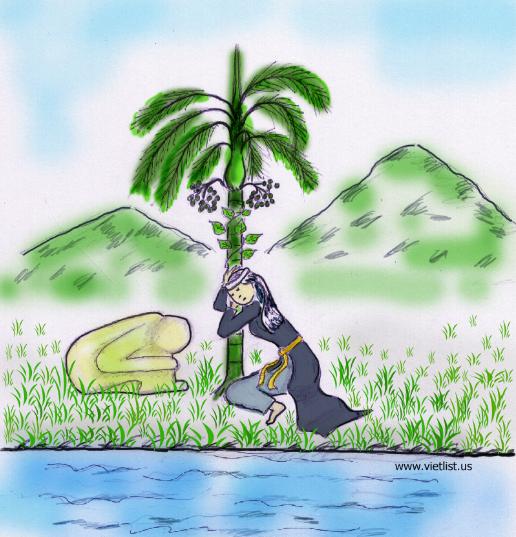
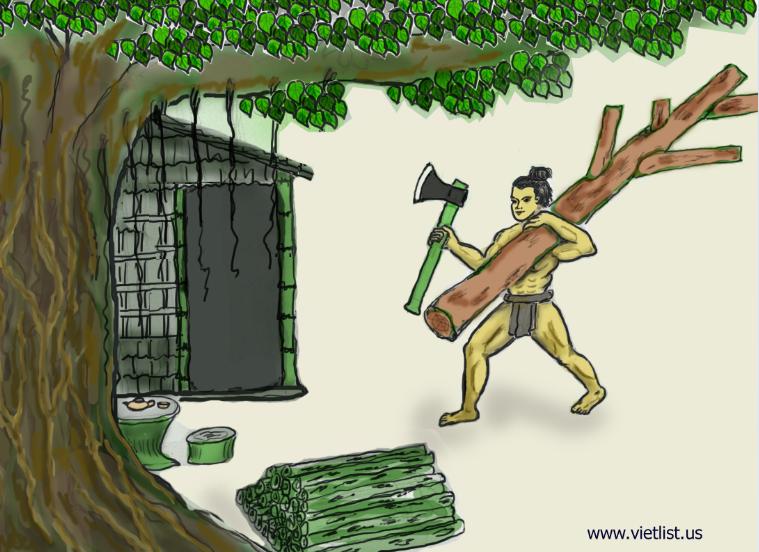
Thạch Sanh càng lớn càng đẹp, khỏe mạnh và hiền lành. Chẳng may khi Thạch Sanh được 12 tuổi thì cha mẹ đều qua đời. Thạch Sanh sống một mình hẩm hiu nơi ven rừng. Ngày ngày Thạch Sanh đốn củi và săn thú đem ra chợ bán để đổii thức ăn. Đáng lẽ Thạch Sanh được nhiều tiền, nhưng vì tính chàng tốt bụng nên hay giúp đỡ, người già cả, nghèo khổ nên chàng sống nghèo khó, đạm bạc. Khi lớn lên Thạch Sanh trở thành chàng trai lực lưỡng, vẫn sống nơi ven rừng, trong căn chòi, dưới gốc đa cổ thụ. Gia tài quý nhất của Thạch Sanh là một cái búa to và một bộ cung tên rất tốt.
Thach Sanh grew up to be a strong, beautiful and very kind boy. Unfortunately, he became parentless when he was 12 years old. He lived by himself in a shabby cottage under the old Banyan tree, deep in the woods. Thach Sanh chopped fire wood and hunted for a living. Thạch Sanh made a decent living by selling fire wood and hunted meat at a local market. Being very generous, he often shared his earnings with the less fortunate in the village. As a result, he was always poor and lived a very humble life. Gradually, Thach Sanh became a handsome, well respected and strong young man. His only valuable possessions were a sharp hammer and a set of bow and arrows.
Thach Sanh grandit et devint un fort, beau et gentil garçon. Malheureusement, il devint orphelin à l’âge de 12 ans. Il vécut alors seul dans une maison minable sous le vieil arbre Banyan, loin dans les bois. Thach Sanh coupa du bois pour le feu et chassa pour vivre. Thach Sanh vécut décemment en vendant du bois de chauffage et en vendant les produits de sa chasse sur le marché. Etant très généreux, il partagea souvent ses gains avec les pauvres du village. De ce fait, il fut toujours pauvre et vécut une vie humble. Graduellement, Thach Sanh devint un beau, très respecté et solide jeune homme. Ses biens ayant le plus de valeur se résumaient à une grosse hache et à un ensemble d’arc et de flèches.
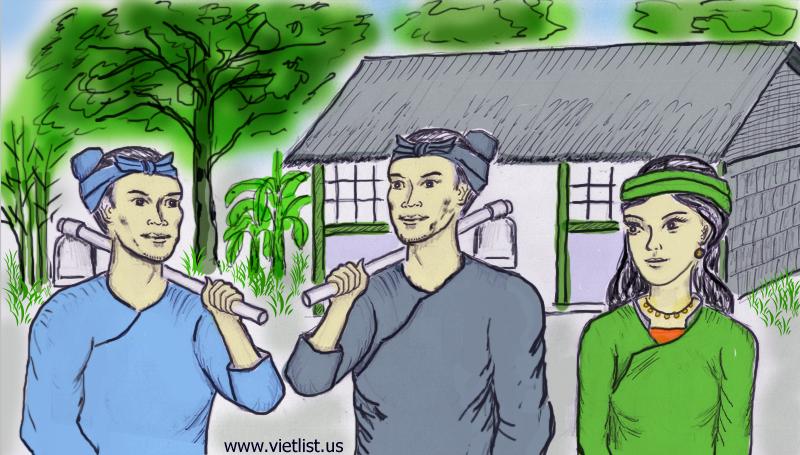
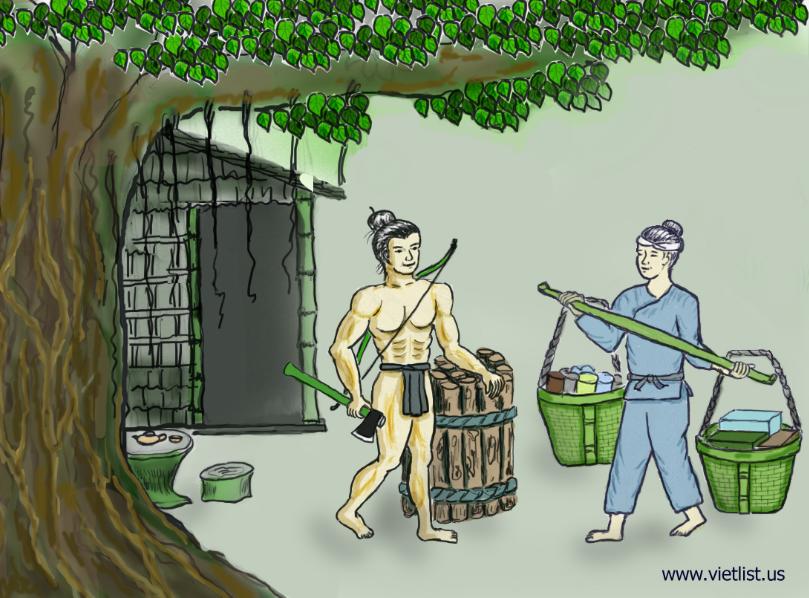
Thạch Sanh có một người bạn tên là Lý Thông. Lý Thông là một thương nhân ở làng bên với một người mẹ già. Thỉnh thoảng gánh hàng đi bán ngang nhà Thạch Sanh, Lý Thông ghé lại chơi, uống chung nước trà, khề khà dăm ba câu chuyện. Lý Thông tính tình rất gian xảo, hay lường gạt, nhưng bên ngoài đối xử thân thiện với Thạch Sanh. Đôi khi Lý Thông mời Thạch Sanh qua nhà mình chơi, ăn cơm và ngủ qua đêm. Thạch Sanh cũng quý mến mẹ Lý Thông.
Thach Sanh had a friend named Ly Thong. Lý Thông was a sneaky business man, who sold groceries from market to market. He passed by the Thạch Sanh's hut once in a while. They drank tea and shared stories with each other. Lý Thông was a bad man but took a liking to Thạch Sanh. Time to time, he would invite Thạch Sanh to his house for dinner and sleepovers in the next village. Lý Thông had an old mother that Thạch Sanh respected because of memories of his own parents.
Thach Sanh avait un ami nommé Lý Thông. Lý Thông était un homme d’affaire sournois qui vendait de l’épicerie de marché en marché. Il passait devant la case de Sanh Thach de temps en temps. Ils buvaient du thé et se racontaient des histoires. Ly Thông était un mauvais homme, mais prit goût à Thach Sanh. De temps en temps, il invitait Thach Sanh dans sa maison pour dîner et passer la nuit dans le village voisin. Ly Thông avait une vieille mère que Thach Sanh respectait à cause du souvenir de ses propres parents.
Nơi làng Lý Thông ở có một con chằn tinh rất hung dử. Nhà vua đã nhiều lần sai quân lính tới giết nó nhưng không sao giết nổi. Nhà vua đành phải xây cho nó một cái miếu thờ và mỗi năm phải hứa cúng một người để nó ăn thịt. Được như vậy chằn tinh mới không phá phách và để yên cho dân chúng làm ăn. Mỗi năm, dân làng bốc thăm, ai trúng thăm thì bị làm mồi cho chằn tinh ăn thịt. Nhà vua hứa ai giết được chằn tinh sẽ ban thưởng.
In Lý Thông 's village, there was a man-eating monster. Since no one could kill the monster, the King had to make the monster's house a temple and offered it one man annually. That was the deal to keep the monster in the forest, away from the village and away from the people. Each year, the villagers drew lottery and the winning man had to sacrify himself for the monster's food. The King offered a great award to anyone who could kill the monster.
Dans le village de Ly Thông, il y avait un monstre mangeur d'hommes. Comme personne ne pouvait tuer le monstre, le roi devait faire de la maison du monstre un temple et lui offrit un homme chaque année. C’était une affaire que de garder le monstre dans la forêt, loin du village, loin du peuple. Chaque année, les villageois tiraient à la loterie l'homme à sacrifier pour la nourriture du monstre. Le roi offrit un grand prix pour toute personne qui pourrait tuer le monstre.
Rủi cho Lý Thông, năm nay anh ta bị rút thăm trúng làm người đem cúng cho chằn tinh ăn thịt. Biết Thạch Sanh là người thật thà lại ở ven rừng không biết nhiều tin tức, Lý Thông nghĩ cách gạt người em kết nghĩa của mình.
Unfortunate for Lý Thông , this year he won the deadly lottery. Knowing that Thạch Sanh was kind and easily influenced, Lý Thông made up a plan to trick his friend.
Malheureusement pour Lý Thông, cette année là, il gagna à la lotterie. Sachant que Thạch Sanh était bon et influençable aisément, Lý Thông conçut un plan pour tromper son ami.
Một hôm vào ngày rằm trăng tỏ, Lý Thông mời Thạch Sanh về nhà mình chơi. Sau khi ăn cơm tối xong, Lý Thông nói với Thạch Sanh :
- Tối nay đến phiên anh phải canh gác miếu chằn tinh nhưng mẹ anh lại không khoẻ trong người, anh nhờ chú đi thế dùm được không ?
On an evening with a full moon, Lý Thông invited Thạch Sanh come over for dinner. After a good meal Lý Thông told Thạch Sanh:
- Today it is my turn to offer food to the monster temple, but my mother is ill. Can you help me to bring the cake and fruit to the temple ?
Un soir de pleine lune, Lý Thông invita Thạch Sanh à dinner. Après un bon repas, Lý Thông dit à Thạch Sanh :
- Aujourd’hui, c’est mon tour d’offrir de la nourriture au temple du monstre, mais ma mère est malade. Pourrais-tu m’aider à apporter gâteau et fruit au temple ?
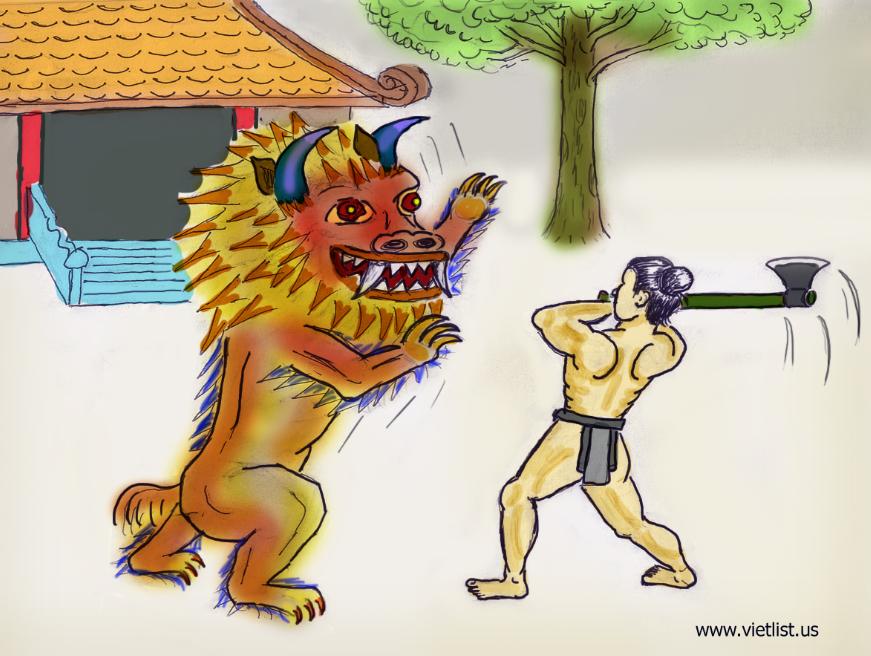
Vì thương mến mẹ con Lý Thông, Thạch Sanh sẵn sàng đi thế. Trăng sáng, Thạch Sanh xách búa, mang trái cây vào miếu chằn tinh để cúng thì nghe một tiếng gầm kinh hồn. Một luồng gió hôi tanh thổi lên, cây cối ngã rào rạo. Thạch Sanh bỗng trông thấy một con chằn tinh to lớn, lông lá, răng nanh trông rất hung dữ tấn công chàng định ăn thịt. Thạch Sanh vội giơ búa lên chém. Dưới ánh trăng Thạch Sanh chiến đấu với chằn tinh liên tiếp 2 giờ.
Thạch Sanh gladly helped Lý Thông . Under the moon light, Thạch Sanh carried his hammer and the food to the temple. When Thạch Sanh approached the monster temple, he heard a terrible roar. There were a deadly smell and the sound of cracking and falling trees. A huge, hungry, terrifying monster with sharp claws jumped out to attack Thạch Sanh. Thạch Sanh calmly and bravely fought back with his hammer. Under the moon light, Thạch Sanh and the monster fought for two hours.
Thạch Sanh aida avec joie Lý Thông. A la lumière de la Lune, Thạch Sanh apporta sa hache et la nourriture au temple. Lorsque Thạch Sanh approcha le temple du monstre, il entendit un rugissement terrible. Il y avait là une odeur de mort et le son d’un craquement d’arbres qui s’abattent. Un énorme, affamé et terrible monstre avec des pinces aiguisées se jeta en sautant sur Thạch Sanh pour l’attaquer. Thạch Sanh répliqua bravement et calmement avec sa hache. Thạch Sanh combatit le monstre pendant deux heures sous la lumière de la Lune.
Cuối cùng Thạch Sanh chiến thắng, giết được chằn tinh. Thạch Sanh cắt đầu chằn tinh vác về nhà Lý Thông. Lý Thông và mẹ nghe tiếng Thạch Sanh kêu cửa sợ quá tưởng Thạch Sanh đã bị ăn thịt, giờ làm ma hiện về. Lý Thông và mẹ quỳ xuống vái rằng:
- Xin chú hãy tha tội cho tôi. Mẹ con tôi hứa sẽ làm lễ cầu siêu và mỗi năm cúng giỗ cho chú.
Finally, Thạch Sanh won and killed the monster. He chopped its head off and brought it back to Lý Thông house. At that time, Lý Thông and his mom were sure that Thạch Sanh was dead. Hearing the knocks at the front door, they thought that was Thạch Sanh's ghost came back for them. They were trembling and said:
- Thạch Sanh, please forgive us. We are sorry to trick you, but we will appreciate you and offer you memorial yearly.
Finalement, Thạch Sanh tua le monstre et le décapita. Il rapporta sa tête à la maison de Lý Thông. A ce moment, Lý Thông et sa mère étaient persuadés que Thạch Sanh était mort. Entendant frapper à la porte de la maison, ils pensèrent que c’était le fantôme de Thạch Sanh qui revenait pour eux. Ils tremblèrent et dirent :
-Thạch Sanh s’il vous plaît, pardonnez-nous. Nous sommes désolés de t’avoir trompé, mais nous vous serons reconnaissants et nous vous offrirons un mémorial chaque année.
Thạch Sanh nghe vậy, biết là Lý Thông gạt mình. Nhưng vốn tốt bụng, Thạch Sanh không giận, nói:
- Em vẫn còn sống đây mà. Chằn tinh đã bị em giết chết đem đầu về đây, anh mở cửa ra mà xem.
Hearing that, Thạch Sanh learned the truth about Lý Thông 's plan. But he kindly answer:
-Don't worry. I am still alive. I just killed the monster and brought back his head here. Open the door, and you will see.
Entendant cela, Thạch Sanh compris la vérité au sujet du plan de Lý Thông, mais il répondit gentillement :
-Ne soyez pas désolés, je suis toujours en vie. J’ai juste tué le monstre et rapporté sa tête. Ouvrez la porte et vous verrez.
Lý Thông thấy Thạch Sanh không có vẻ giận, hé cửa xem rồi mở cửa cho Thạch Sanh vào. Nhìn thấy cái đầu chằn tinh quá lớn và ghê gớm mẹ con Lý Thông té xỉu. Qua cơn hoảng sợ, Lý Thông nghĩ ngay ra được cách gạt Thạch Sanh. Anh ta làm ra vẻ sợ hãi, lo lắng:
- Con chằn tinh này là của vua nuôi, sao chú dám giết nó. Chú có tội to lắm rồi, phải trốn ngay đi. Để tôi lo dọn cái đầu cho.
Hearing Thạch Sanh voice, Lý Thông peeked through the door slots and then opened the door. To their surprise, there Thạch Sanh stood next to the bloody monster's head. Seeing the scary head, both of them fainted. After recovering, Lý Thông found another way to cheat Thạch Sanh. He pretended to be worried:
- This monster is the King's pet, but now you have killed him. That was a serious crime. Why don't you run away immediately. I'll take care of the head.
Entendant la voix de Thạch Sanh, Lý Thông jeta un œil à travers une fente de la porte et l’ ouvrit . A leur surprise, Thạch Sanh se tenait debout près de la tête du monstre sanguinaire. Voyant l’effrayante tête, ils s’évanouirent tous les deux. Lorsqu’ils revinrent à eux Lý Thông trouva un autre moyen de tromper Thạch Sanh. Il prétendit d’être désolé :
-Ce monstre est l’animal domestique du roi, mais vous l’avez tué maintenant. C’est un crime important. Pourquoi ne vous échappez-vous pas immédiatement? Je prendrais soin de la tête.
Thạch Sanh tưởng thật, trở về rừng, ở trong căn lều của mình. Còn Lý Thông lên kinh đô báo tin cho vua biết chính mình đã giết được chằn tinh. Nhà vua mừng rỡ, cho lính về làng mang đầu chằn tinh lên kinh đô. Phải cần đến 4 người lính mới khiêng nổi cái đầu chằn tinh. Vua ban thưởng cho mẹ con Lý Thông nhiều vàng bạc và phong cho hắn chức Lãnh binh, chuyên huấn luyện lính trong cung vua.
Thạch Sanh still believed that Lý Thông was serious. He ran back to his hut in the forest. Lý Thông hurried to the capital and claimed to the King that he has killed the monster himself. The King gladly ordered a group of soldiers to Lý Thông 's house to bring back the monster's head. The head was so heavy that it took 4 soldiers to carry. The King award Lý Thông lots of moneys and gold and set him up to be a corporal to train the royal guards for the King.
Thạch Sanh pensa encore que Lý Thông était sérieux. Il retourna dans sa hutte dans la forêt. Lý Thông se précipita dans la capitale et prétendit au roi qu’il avait tué le monstre lui-même. Le roi heureux ordonna à un groupe de soldats de se rendre à la maison de Lý Thông pour rapporter la tête du monstre. La tête était si lourde qu’il fallut quatre soldats pour la transporter. Le roi accorda à Lý Thông beaucoup d’argent et de l’or et le nomma caporal-chef pour entraîner sa garde royale.
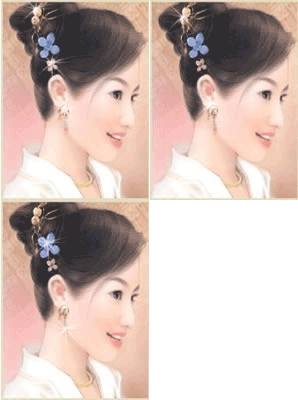
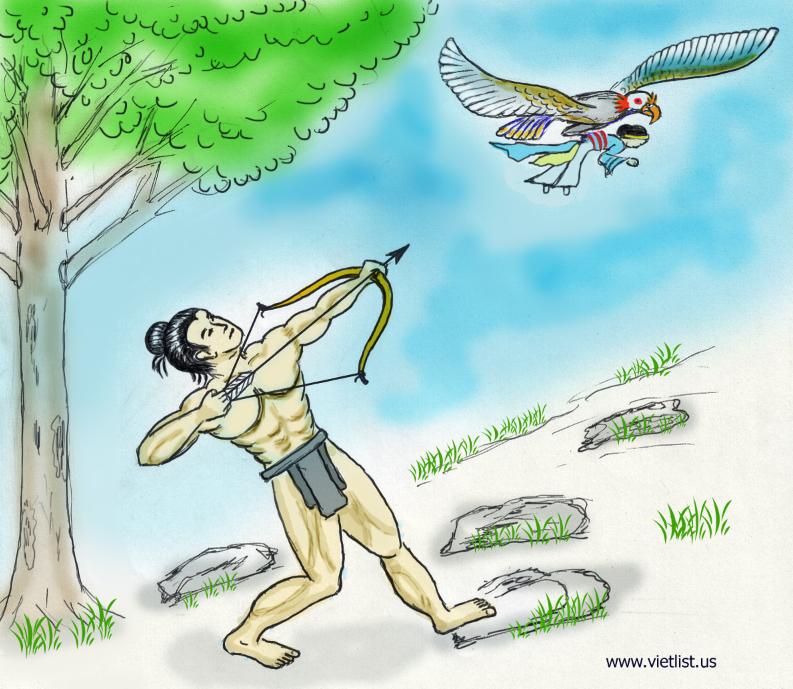
Nhà vua có một cô con gái đã lớn, rất đẹp tên là Thúy Hoa. Vua cũng đang tìm phò mã cho con. Một hôm công chúa đi dạo vườn hoa, bỗng có con Ðại bàng tinh sà xuống cắp công chúa bay đi. Tình cờ đại bàng bay ngang trên cây đa có căn lều của Thạch Sanh. Nghe tiếng công chúa kêu cứu, Thạch Sanh nhìn lên. Thấy đại bàng bắt người, Thạch Sanh chạy theo giương cung bắn một phát trúng ngay vào cánh. Đại bàng trúng tên đau lắm nhưng tiếp tục bay đi. Thạch Sanh chạy theo một đỗi thì thấy đại bàng bay về hướng núi, phía có 1 cái hang động. Thấy không làm gì được, Thạch Sanh nhớ hướng chim bay rồi trở về nhà.
The King had a beautiful princess, named Thúy Hoa, who just reached 18. He was looking for a right man for his daughter. One day, when the princess Thúy Hoa was waking in the royal garden, a huge evil hawk dropped down and captured the princess, flying away. It happened that the hawk flew by the Thạch Sanh’s hut. Hearing the yell “Help” from the princess, Thạch Sanh ran out and saw the bird capturing a girl. Thạch Sanh ran after the bird and shot at his wing with a bow and arrow. With a wounded wing, the bird tried his best to fly away. Thạch Sanh ran after the bird and saw he flew toward the mountains at a distance. Unable to do anything further, Thạch Sanh tried to remember the direction and went back home.
Le roi avait une jolie princesse nommée Thúy Hoa qui avait juste atteint l’âge de 18 ans. Il recherchait l’homme qu’il lui fallait. Un jour, alors que la princesse Thúy Hoa se promenait dans le jardin royal, un immense et démoniaque aigle s’abattit, captura et emporta la princesse au loin. Il se trouva que l’aigle passe au dessus de la hutte de Thạch Sanh. Entendant les cris d’appel à l’aide de la princesse, Thạch Sanh sortit et vît l’oiseau capturant une fille. Thạch Sanh courut après l’oiseau et visa son aile avec un arc et une flèche. Avec une aile blessée, l’oiseau essaya de s’éloigner en volant du mieux qu’il put. Thạch Sanh courut après l’oiseau et vît qu’il se dirigeait vers les montagnes au loin. Incapable de faire quelque chose de plus, Thạch Sanh essaya de se rappeler la direction du vent et retourna chez lui.
Khi nghe tin công chúa bị yêu quái cắp đi mất tích nhà vua đau lòng xót ruột, truyền cho Lý Thông đi tìm, hứa tìm được sẽ gả công chúa cho. Lý Thông vừa mừng vừa lo. Lý Thông lo vì mình bất tài khó tìm được công chúa. Cuối cùng Lý Thông nhớ tới Thạch Sanh bèn mang quân đi tìm Thạch Sanh và kể chuyện công chúa bị Ðại bàng tinh bắt mất cho Thạch Sanh nghe. Thạch Sanh thật thà mà kể lại về việc bắn trúng cánh chim. Lý Thông mừng lắm, lập tức nhờ Thạch Sanh dẫn đường, mang lính đến nơi sào huyệt của yêu quái. Thạch Sanh tình nguyện xuống hang tìm công chúa.
Hearing the painful news of the princess, the King ordered Lý Thông to go out to find her. The King also promised her hand in marriage if he can return her safely. Lý Thông felt happy but worried. He knew clearly that he had almost no way to find her. Finally, he remembered Thạch Sanh so he brought his army to Thạch Sanh house, and told Thạch Sanh about the story. Being honest, Thạch Sanh told Lý Thông about how he saw the bird, shot and wounded the bird with an arrow. Lý Thông felt very happy. He asked Thạch Sanh to go with his army to the mountains. They found a cave where the bird lived. Thạch Sanh volunteered to go down the cave to find the princess.
Entendant les nouvelles douloureuses au sujet de la princesse, le roi ordonna à Lý Thông d’aller la chercher. Le roi promit également de lui donner la princesse en mariage s’ il pouvait la ramener saine et sauve. Lý Thông se sentit heureux mais inquiet. Il savait clairement qu’il n’y avait presqu’aucune chance la trouver. Finalement, il se rappela de Thạch Sanh et il vînt avec son armée à la maison de Thạch Sanh et raconta l’histoire à Thạch Sanh. Etant honnête, Thạch Sanh dit à Lý Thông qu’il avait vu l’oiseau et qu’il l’avait blessé avec une flèche. Lý Thông se sentit très heureux. Il demanda à Thạch Sanh d’aller avec son armée dans les montagnes. Ils trouvèrent une caverne où l’oiseau vivait. Thạch Sanh se porta volontaire pour descendre dans la caverne pour trouver la princesse.
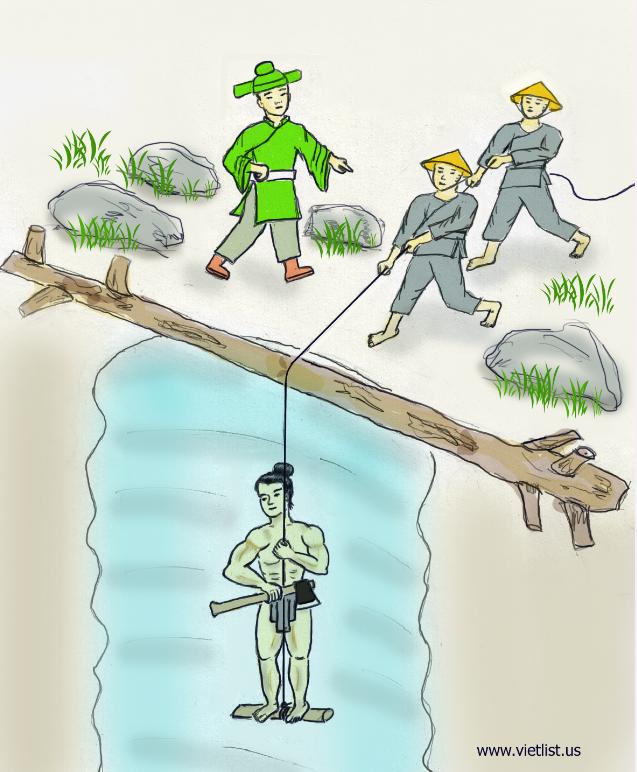
Lý Thông sai quân cột dây rồi thòng cho Thạch Sanh xuống hang. Thạch Sanh mang theo cái búa xuống tới đáy hang, dò tìm theo dấu máu khô tới một căn phòng Thạch Sanh trông thấy một cô gái đang ngồi chụm nồi thuốc vừa khóc thút thít. Đoán chừng là công chúa Thúy Hoa, Thạch Sanh kêu nhỏ :
- Xin công chúa đừng sợ. Tôi là Thạch Sanh được lịnh vua đi tìm công chúa đây.
Lý Thông lowed Thạch Sanh down with a rope. Thạch Sanh carried his hammer to the bottom of the cave, following the spots of dried blood to a hall. There, he saw a girl crying and cooking herbal medicine for the evil bird. Thinking that was the princess Thúy Hoa, Thạch Sanh called her with a soft voice:
- Princess, don’t be afraid. My name is Thạch Sanh. I am looking for you by the King’s order.
Lý Thông descendit Thạch Sanh à l’aide d’une corde. Thạch Sanh emporta sa hache au fond de la caverne en suivant les taches de sang séchées jusqu’à une salle. Là, il vit la fille crier et cuisinant une herbe médicinale pour le démon. Pensant qu’il s’agissait de la princesse Thúy Hoa, Thạch Sanh l’appela d’une voie douce :
-Princesse, n’ayez pas peur. Je m’appelle Thạch Sanh. Je vous recherche au nom du roi.
Công chúa cho Thạch Sanh biết Đại Bàng có tài biến hóa thành người và rất hung dữ. Nó bị mũi tên của Thạch Sanh bắn trúng, bị thương nặng, hiện thành một người đàn ông đang nằm trong phòng. Công chúa phải nấu thuốc cho nó uống.
The princess told Thạch Sanh about the evil hawk. He was transformed and became a cruel man now. He was wounded by Thạch Sanh’s arrow and was lying in his room. The princess had to serve him, prepared the herbal medicine for him.
La princesse dit se qu’elle savait au sujet de l’aigle démoniaque. Il s’était transformé et était devenu maintenant un homme cruel. Il avait été blessé par la flèche de Thạch Sanh et il était étendu dans sa chambre. La princesse devait le servir et lui préparer l’herbe.
Thạch Sanh kêu công chúa giả bộ bưng thuốc vào cho nó uống. Còn chàng nhẹ nhàng theo sau. Khi cửa phòng Ðại bàng tinh mở ra, Thạch Sanh xông vào trước chém Ðại bàng tinh. Ðại bàng tinh rất khỏe, nhưng vì bị thương nên không thể địch lại Thạch Sanh. Đánh nhau một lúc, Ðại bàng tinh bị Thạch Sanh chém chết, hiện nguyên hình là một con chim đại bàng to lớn dị thường.
Thạch Sanh asked the princess to bring medicine to the bird man as he followed behind. When the room door opened, Thạch Sanh jumped in and attacked the bird man with the hammer. Even though the bird man was very strong, the wound had slowed him down. After a big fight, Thạch Sanh managed to kill the bird man and watched him transform back to a big dead bird.
Thach Sanh demanda à la princesse d’apporter le médicament à l’homme oiseau en la suivant. Lorsque la porte de la chambre s’ouvrit, Thạch Sanh se précipita à l’intérieur et attaqua l’homme oiseau avec la hache. Bien que l’homme oiseau fût très costaud, la blessure l’avait affaibli. Après une grande attaque, Thạch Sanh arriva à tuer l’homme oiseau et le vit se transformer en un gros oiseau mort.
Công chúa mừng rỡ cám ơn Thạch Sanh. Thạch Sanh dẫn công chúa trở ra, chỉ cách đứng lên dây, rồi ra dấu cho Lý Thông kéo lên. Công chúa Thúy Hoa nhìn Thạch Sanh lưu luyến muốn Thạch Sanh cùng đi, nhưng Thạch Sanh từ chối viện cớ là dây nhỏ chỉ mang đủ một người, xin công chúa lên trước rồi mình sẽ lên sau.
The princess happily thanked Thạch Sanh. Thạch Sanh lead the princess to the rope and gave signal so that Lý Thông pulled her up. Princess Thúy Hoa appreciated for Thạch Sanh save and wanted Thạch Sanh to go up with her. But Thạch Sanh politely asked the princess go up first. Then he will came later since the rope might not be strong enough for both of them.
La princesse remercia chaudement Thạch Sanh. Thạch Sanh conduisit la princesse à la corde et donna le signal à Lý Thông pour la tirer. La princesse Thạch Sanh lui en fut reconnaissante. La princesse désira que Thạch Sanh remonte avec elle, mais Thạch Sanh poliment demande à la princesse d’y aller la première. Il remonterait après puisque la corde ne pourrait pas être assez solide pour tous les deux.
Không ngờ Lý Thông thấy đã cứu được công chúa bèn thu dây lại, không thả xuống cho Thạch Sanh lên nữa. Lý Thông lại sai lính khiêng đá to lấp cửa hang luôn. Lý Thông muốn giết chết Thạch Sanh để chiếm công cứu công chúa. Công chúa thấy Lý Thông tàn ác nên sợ quá, trở thành câm không nói ra tiếng được.
Surprisingly, after rescuing the princess, Lý Thông ordered his army to hold the rope and throw big rocks down so that Thạch Sanh had no way to go up. Lý Thông wanted to kill Thạch Sanh so that he could claim the prize by himself. Being so shocked with Lý Thông merciless action, the princess became moveless and speechless.
Sa façon surprenante, après avoir sauvé la princesse, Lý Thông ordonna à son armée de tenir la corde et de jeter de grosses pierres de façon à empêcher Thạch Sanh de remonter. Lý Thông voulait tuer Thạch Sanh pour réclamer le prix pour lui-même. Choquée par l’action sans merci de Lý Thông, la princesse devint impotente et muette.
Thạch Sanh chờ mãi không thấy Lý Thông thả dây xuống mà chỉ nghe tiếng ầm ầm rồi thấy đá đổ xuống lấp cửa hang. Thạch Sanh không hiểu chuyện gì xảy ra, chàng buồn rầu đi sâu vào trong hang dò dẩm tìm lối ra.
Thạch Sanh waited and waited. No rope appeared but in its place were big falling rocks. Thạch Sanh did not understand what was going on. Confused, he walked deeper into the cave searching for a survival route.
Thạch Sanh attendit sans fin. Aucune corde n’apparût, mais à la place de grosse pierres. Thạch Sanh ne comprit pas ce qui se passait. Troublé, il marcha à tâtons au plus profond de la caverne à la recherche d’une issue.
Bổng Thạch Sanh nghe tiếng khóc của con gái. Chàng theo tiếng khóc đi đến một căn phòng nhỏ thì thấy 2 cô gái đang bị Ðại bàng tinh nhốt trong phòng. Thạch Sanh phá cửa phòng giam cứu 2 cô gái. Thì ra đây là 2 cô Công chúa con của vua Thủy Tề dưới biển Đông, bị đại bàng tinh bắt giam từ mấy tháng nay. Hai công chúa có thể bơi lội dưới nước như những nàng tiên cá hay lên bờ đi bộ như người thường. Vì cửa động đã bị lấp, 2 nàng dẫn Thạch Sanh đi vào trong, đến 1 cái hồ nhỏ ăn thông ra biển Đông. Hai nàng bơi trước, giúp Thạch Sanh bơi theo dưới nước mà không bị trở ngại.
Suddenly, Thạch Sanh heard a girl crying. Following the sound, Thạch Sanh found two ladies imprisoned in a small room. Using his ax to break through the door, Thạch Sanh rescued the girls. They were the princesses of the King of the Ocean that the bird man had captured and imprisoned. The two princesses were mermaids in the ocean and became the girls upon stepping foot on land. Since the cave opening was blocked, the 2 princesses led Thạch Sanh inward to a small lake that connected to the ocean. With the help from the ocean princesses, Thạch Sanh was able to swim under water without any problems.
Soudain, Thạch Sanh entendit le cri d’une fille. En suivant le son, Thạch Sanh trouva deux femmes emprisonnées dans une petite chambre. Thạch Sanh sauva les filles en utilisant sa hache pour briser la porte. C’étaient les princesses du roi de l’océan que l’oiseau homme avait capturées et emprisonnées. Les deux princesses étaient des sirènes dans l’océan et étaient devenues des filles en posant le pied sur la terre ferme. Puisque l’ouverture de la caverne était bloquée, les deux princesses conduites par Thạch Sanh vers l’intérieur à un petit lac qui était relié à l’océan. Avec l’aide des princesses de l’océan, Thạch Sanh put nager sous l’eau sans problème.
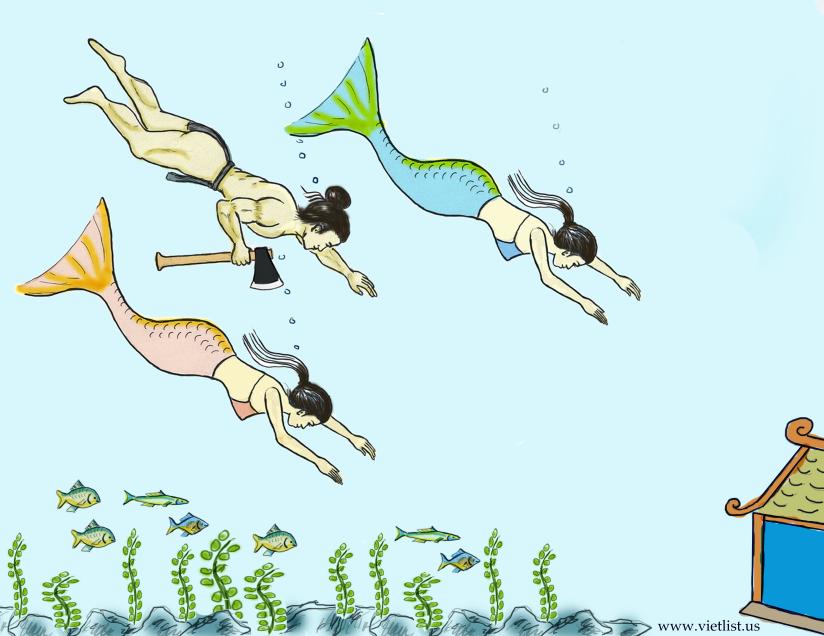
Về đến thủy cung, 2 nàng công chúa tâu với vua Thủy Tề về việc được Thạch Sanh cứu giúp. Vua giữ Thạch Sanh ở lại chơi hai tuần để cám ơn. Khi chàng ra về vua Thủy Tề tặng Thạch Sanh một cây đàn và 1 cái nồi nhỏ, bảo rằng khi gặp nguy cấp có thể lấy ra xài, nó sẽ giúp chàng qua cơn khốn khó. Sau đó 2 nàng công chúa lại đưa Thạch Sanh về lại mặt đất, chàng lại sống trong căn chòi nhỏ như xưa.
They all swam to the Royal palace at the bottom of the ocean where they were welcomed by the King of the Ocean. The King hosted Thạch Sanh for two weeks to say thanks to him. When Thạch Sanh came to say good bye to the King, he gave Thạch Sanh one special guitar, and a small pot for cooking rice. The King told him that the souvenirs can be useful in case of an emergency. They will help Thạch Sanh in difficult times. Then the two ocean princesses swam with Thạch Sanh back to the dry land. Thạch Sanh came home and lived in his small hut again.
Ils nagèrent tous au palais royal au fond de l’océan où ils furent accueillis par le roi de l’océan. Le roi hébergea Thạch Sanh pendant deux semaines pour le remercier. Lorsque Thạch Sanh vint dire au revoir au roi, le roi lui donna une guitare spéciale et un petit pot pour cuire le riz. Le roi lui dit que les souvenirs peuvent être utiles en cas d’urgence. Ils aideront Thạch Sanh en temps difficiles. Alors, les deux princesses de l’océan nagèrent avec Thạch Sanh jusqu'à la terre ferme. Thạch Sanh retourna vivre dans sa maison.
Nói về Lý Thông, sau khi cứu công chúa Thúy Hoa về được vua khen thưởng, nhưng vua chưa thể gả công chúa cho Lý Thông vì công chúa bị câm, suốt ngày buồn rầu. Lý Thông cũng hiểu rằng công chúa còn nhớ Thạch Sanh là ân nhân đã cứu mình nên vẫn để tâm theo dõi. Ít lâu sau, Lý Thông nghe tin Thạch Sanh đã trở về sống trong căn chòi cũ. Lý Thông cho lính đến vu cáo là Thạch Sanh ăn cắp, rồi bắt giam Thạch Sanh trong ngục lớn trong triều đình, chờ ngày hại Thạch Sanh.
On the other side, Lý Thông brought princess Thúy Hoa home and received a big award from the King. But Lý Thông could not marry the princess yet for she had been very sad and speechless. Lý Thông knew that she still remember Thạch Sanh who had saved her life. Lý Thông ordered the spies check for Thạch Sanh in the village from time to time. Knowing that Thạch Sanh had come back to his hut, Lý Thông made a plan to frame Thạch Sanh for stealing and to put Thạch Sanh into the central jail at the capital. Lý Thông would wait to kill Thạch Sanh some day later.
De l’autre côté, Lý Thông rapporta la princesse Thúy Hoa à la maison et reçu une grosse récompense du roi. Mais Thúy Hoa ne pouvait encore se marier avec la princesse depuis qu’elle était muette et triste. Lý Thông savait qu’elle se rappelait toujours de Thạch Sanh qui avait sauvé sa vie. Lý Thông ordonna à ses espions de rechercher Thạch Sanh dans le village de temps en temps sachant que Thạch Sanh était revenu dans sa hutte. Lý Thông conçut un plan pour faire croire que Thạch Sanh avait volé afin de le mettre en prison dans la prison centrale de la capitale. Lý Thông tuerait alors Thạch Sanh quelques jours plus tard.
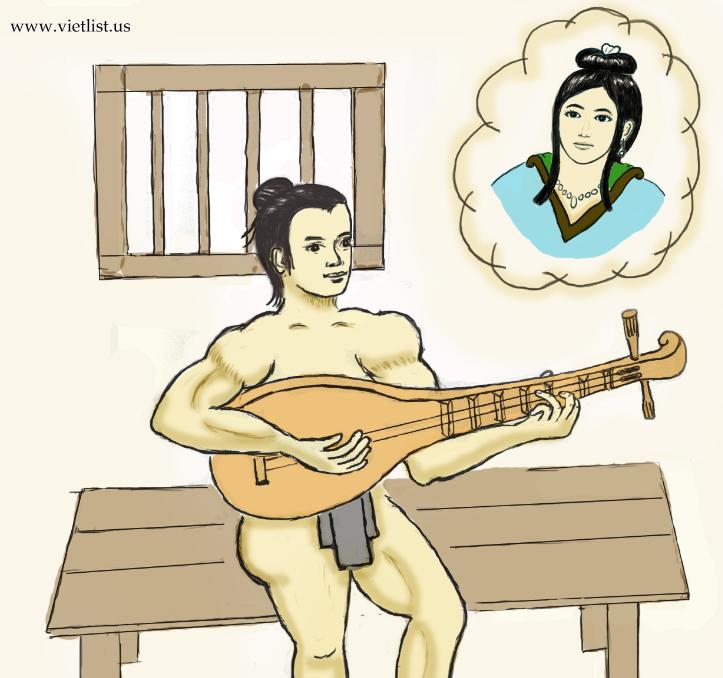
Thạch Sanh bị bắt giam vô cớ, chưa rõ nguyên nhân. Một hôm thấy buồn, Thạch Sanh lấy cây đàn của vua Thủy Tề ra đàn chơi giải sầu. Cây đàn có tiếng kêu bình thường, bổng nhiên từ từ kêu lớn dần và ra thành lời ca:
" Đàn kêu tích tịch tình tang,
Ai đem công chúa lên hang mà về..."
Thạch Sanh was surprised to get imprisoned for no reason. One day, feeling sad, Thạch Sanh played with the guitar that the King of the Ocean had given him. At first the guitar sounded normal. Than the music sound became louder and louder and echoed very far. The guitar strings sounded like a song:
“ Tic tic tang tang !
Who saved the princess from the cave so she can return home ? …”
Thạch Sanh fut surpris d’être emprisonné sans raison. Un jour se sentant triste, Thạch Sanh joua de sa guitare que le roi de l’océan lui avait donnée. Tout d’abord le son de la guitare sembla normal. Puis le son de la musique devint de plus en plus fort et porta très loin. Les cordes de la guitare sonnaient comme une chanson.
« Tic tic tang tang ! » Qui a sauvé la princesse de la caverne pour lui permettre de retourner chez elle ?
Công chúa đang ngồi buồn rầu bổng nghe tiếng đàn thần, nàng ú ớ rồi nói ra thành tiếng. Công chúa đến gặp vua cha, quỳ tâu rõ nàng được cứu ra khỏi hang như thế nào, và nàng kể rõ Lý Thông đã gian ác, truyền lắp cửa hang rồi cướp công của Thạch Sanh như thế nào. Nàng cũng xin vua cho mời người đánh đàn.
Lonely in her room, the princess Thuy Hoa suddenly heard the song from the magic guitar. She stood up, voiced out and and started speaking again. She came to the King, told him everything about the merciless Lý Thông who had blocked the cave to kill Thạch Sanh. She also asked permission to see the guitarist.
Seule dans sa chambre, la princesse Thúy Hoa entendit soudainement la chanson de la guitare magique. Elle se leva, retrouva la parole et se remit à parler. Elle vint trouver le roi, lui dit tout au sujet du manque de charité de Lý Thông qui avait bloqué la caverne pour tuer Thạch Sanh. Elle demanda aussi la permission de voir le guitariste.
Sau khi vua truyền Thạch Sanh đến gặp vua và công chúa, nhà vua biết rõ mọi sự cũng như sự gian ác của Lý Thông. Vua nổi giận cho bắt Lý Thông cùng bà mẹ đến. Cả 2 quỳ xuống chịu tội. Vua muốn xử chém đầu nhưng Thạch Sanh xin vua tha cho họ vì họ là bạn của Thạch Sanh. Vua đuổi cả 2 người về lại làm dân. Trên đường dẫn nhau về quê cũ, hai mẹ con Lý Thông đã bị Trời đánh chết.
After talking to Thạch Sanh, the King learned all the truth about Lý Thông. The King angrily order Lý Thông and his mom present. The King wanted to order capital punishment. But Thạch Sanh pledged for mercy since they were his friends. The King ordered them to leave the capital immediately. On the way home, Lý Thông and his mom were struck and killed by a thunder storm.
Après avoir parlé à Thạch Sanh, le roi apprit toute la vérité au sujet de Lý Thông et de sa mère présente. Le roi voulut appliquer la peine de mort, mais Thạch Sanh plaida pour le pardon puisqu’ils étaient amis. Le roi ordonna qu’ils quittent la capitale immédiatement. Sur le chemin du retour à sa maison, Lý Thông et sa mère furent frappés et tués par un coup de tonnerre.
Về phần Thạch Sanh, chàng được vua gà công chúa Thúy Hoa và phong cho chàng làm chức Lãnh binh coi sóc binh lính phòng vệ triều đình.
The King married Thạch Sanh and princess Thúy Hoa. Thạch Sanh became a general who took care of the guarding of the capital city.
Le roi marria Thạch Sanh et la princesse Thúy Hoa. Thạch Sanh devint un général qui prit en charge la garde de la capitale.
Ít năm sau, có giặc nước ngoài xâm lấn, vua sai Thạch Sanh ra đánh giặc. Thạch Sanh ra đánh giặc, vì giặc quá đông quân đội Thạch Sanh bị vây trong một vùng núi, không có đủ lương thực. Thạch Sanh vẫn bình tĩnh tổ chức phòng thủ đề phòng địch tấn công. Thạch Sanh nhớ lời dặn của vua Thủy Tề, đem cái nồi vua Thủy Tề tặng ra nấu cơm. Lạ thay, nồi cơm tuy nhỏ, nhưng cơm được múc ra nồi vẫn còn đầy, không bao giờ hết. Nhờ thế lính của chàng được no bụng.
A few year later, the neighboring armies invaded the country. The King order Thạch Sanh and his army go out to defend the country. The invading armies were bigger and stronger. At first, Thạch Sanh’s army was isolated and enclosed in a mountain area. His soldiers ran out of food. In that situation, Thạch Sanh calmly and cleverly arranged his army to hold up the defending position. He remember the small rice pot that the King of the Ocean had given him. Thạch Sanh used the pot to cook rice. After eating, the pot would magically refill itself and was never running out of rice. Thạch Sanh shared the food with his whole army so everybody could have enough food.
Quelques années plus tard, les armées de pays voisins envahirent le pays. Le roi ordonna à Thạch Sanh et à son armée de sortir pour défendre le pays. Les armées d’invasion étaient plus grosses et plus solides. Tout d’abord, l’armée de Thạch Sanh fut isolée et enfermée dans une région montagneuse. Ces soldats en vinrent à manquer de nourriture. Dans cette situation, Thạch Sanh calmement et de façon intelligente disposa son armée en position défensive. Il se rappela du petit pot pour cuire le riz. Après avoir mangé, the pot se remplit de nouveau magiquement sans qu’il ne manque jamais de riz. Thạch Sanh partagea la nourriture avec toute son armée de telle sorte que chacun puisse en avoir assez.
Với trí thông mình, lòng kiên nhẫn và sức mạnh vô địch, Thạch Sanh tổ chức phản công và từ từ chiến thắng quân giặc. Thạch Sanh kéo quân chiến thắng trở về.
With his intelligence, patience, and strength, Thạch Sanh arranged many counterattacks. Gradually, Thạch Sanh’s army gained back the land which led to a full victory.
With his intelligence, patience, and strength, Thạch Sanh arranged many counterattacks. Gradually, Thạch Sanh’s army gained back the land which led to a full victory.
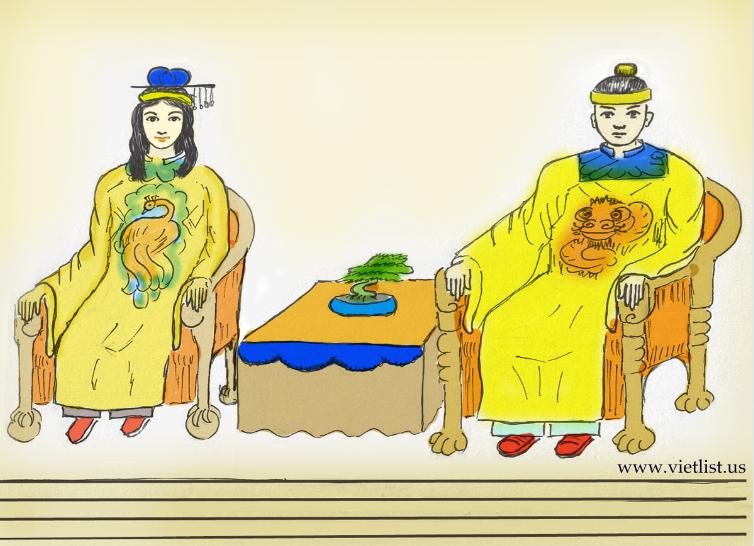
Sau đó vua cha đến tuổi già nên nhường ngôi vua lại cho Thạch Sanh. Thạch Sanh cùng công chúa Thúy Hoa chăm sóc dân và việc nước rất chu đáo, nhân hậu. Mọi người trong nước sống trong cảnh thái bình, yên vui.
Later, when the King became old, he pass the throne to Thạch Sanh. Thạch Sanh and his wife, princess Thúy Hoa, carefully took care the country, and the people with love. Every citizen lived happily in their peaceful country
Plus tard, lorsque le roi devint vieux, il passa le trône à Thạch Sanh qui avec la princesse Thúy Hoa prit soin du pays et du peuple avec amour. Chaque habitant vécut heureux dans leur pays en paix./.